SKU: 37714165044
herbicide for elephant grass

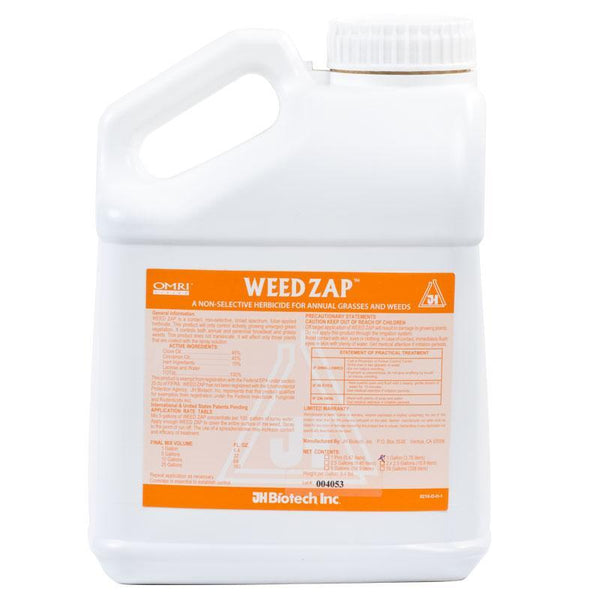
herbicide for elephant grass Weed Zap (gallon)

Sale price$25.48 Regular price$28.31
Save 10%

Pay in installments of $7.08 with ShopPay, AfterPay and Klarna

Shipping Estimate
USA
  • USA
  • CAN

Ships within 48 hours · Estimated delivery Aug 9 - Aug 14

Promo Codes Available:

For Your Every Summer RSVP, with Code: SUMMER15

Description

herbicide for elephant grass Weed Zap (gallon)Broad spectrum, non selective, contact herbicide, foliar applied herbicide. Best results when applied to actively growing emerged green vegetation six inches in height or less. Controls both annual and perennial broadleaf and grassy weeds. Does not translocate, and only affects plants actually coated with the spray solution. Contains 45% clove oil, 45% cinnamon oil and 10% inert ingredients (lactose and water). Introduction to Weed Zap Weed Zap is a

Broad spectrum, non-selective, contact herbicide, foliar-applied herbicide. Best results when applied to actively growing emerged green vegetation six inches in height or less. Controls both annual and perennial broadleaf and grassy weeds.

  • Does not translocate, and only affects plants actually coated with the spray solution.
  • Contains 45% clove oil, 45% cinnamon oil and 10% inert ingredients (lactose and water).

Introduction to Weed Zap

Weed Zap is a highly effective herbicide that offers a sustainable and eco-friendly solution for controlling weeds in your garden or landscape. This product is designed to eliminate unwanted vegetation while minimizing harm to the environment and non-target plants.

What is Weed Zap?

Weed Zap is a non-selective, post-emergent herbicide formulated to target a wide range of common weeds. It is available in a convenient gallon-sized container, making it suitable for both home gardeners and commercial growers. This herbicide is designed to be used as a spot treatment, which means you can apply it directly to the weeds you want to eliminate without affecting nearby desirable plants.

Key Features and Benefits

  • Organic Ingredients: One of the standout features of Weed Zap is its organic composition. It is made from natural ingredients, including citric acid and clove oil, which break down quickly in the environment, leaving behind minimal residues. This makes Weed Zap a safe choice for organic gardening and environmentally-conscious individuals.

  • Fast-Acting: Weed Zap is known for its rapid action. Upon application, it starts to work within hours, with visible results often seen within a day or two. This quick action can help you regain control of your garden and prevent weeds from taking over.

  • Biodegradable: Weed Zap is biodegradable, which means it naturally breaks down into harmless components in the soil. This reduces the risk of long-term soil contamination, making it a sustainable choice for weed control.

  • Non-Systemic: Weed Zap is a non-systemic herbicide, which means it only affects the parts of the plant it comes into contact with. It does not get absorbed and transported throughout the plant, minimizing the risk of harming nearby desirable vegetation.

  • Easy Application: Weed Zap comes in a convenient spray bottle, allowing for easy and precise application. Simply spray it directly onto the weeds, ensuring thorough coverage for effective control.

How to Use Weed Zap

Using Weed Zap is straightforward, but it's essential to follow the recommended guidelines for safe and effective weed control:

  • Identify Target Weeds: Before applying Weed Zap, identify the specific weeds you want to eliminate. Ensure that the herbicide comes into direct contact with the foliage of the target weeds.

  • Spray Application: Hold the spray bottle approximately 12 inches away from the weeds and spray evenly until the foliage is wet but not dripping. Be cautious not to overspray onto desirable plants.

  • Timing: Apply Weed Zap on a sunny day when the weeds are actively growing. Avoid applying it during rainy or windy conditions to prevent drift and ensure maximum effectiveness.

  • Repeat as Needed: Some stubborn weeds may require a second application after a few weeks to achieve complete control. Monitor your garden regularly and reapply Weed Zap if necessary.

Safety Considerations

While Weed Zap is considered safe for the environment and non-target plants when used as directed on the label, it's essential to take precautions to protect yourself and others:

  • Wear Protective Gear: When handling Weed Zap, wear protective clothing, including gloves, long sleeves, and safety goggles, to prevent skin and eye contact.

  • Keep Children and Pets Away: Ensure that children and pets are kept away from treated areas until the product has dried.

  • Storage: Store Weed Zap in its original container in a cool, dry place, out of reach of children and pets.

Weed Zap is a reliable and eco-friendly solution for effectively controlling weeds in your garden or landscape. Its organic composition, fast-acting nature, and minimal environmental impact make it a top choice for those seeking sustainable weed control options. By following the provided guidelines and safety precautions, you can enjoy a weed-free garden while minimizing harm to the environment and non-target plants.

Shipping Notes
  • Free Standard Shipping on $100+ Orders to the USA.
  • Except Preorder products are shipped in 48 hours.
  • Delivery to the USA:
  1. Standard Shipping : 3-10 business days
  • If time is of the essence, please consider selecting expedited delivery for faster service.
Exchange/Return Notes
  • We offer a 30-day return/exchange service after receiving.
  • Final sale items are not eligible for returns or exchanges.
  • To process your return/exchange, please contact us at [email protected]
  • Please click here for more details>>> Return & Exchange Policy
SKU: 37714165044

Discover Niche Categories That Outsell herbicide for elephant grass

Top-Converting Item to Boost Your Average Order

4.9 ★★★★★
Based on 24 reviews
Sort
Highest Rating
Newest First
Oldest First
Product Reviews
D
Verified Purchase
David R. Papke
Dallas, US
★★★★★ 5
Recommended for All Lawyers
Format: Paperback
Meyer proves his initial point that much of what lawyers do is storytelling, and he achieves his goal of providing a primer on narrative theory for lawyer-storytellers. The book is sophisticated but written in an engaging way using non-technical language. Examples from legal and literary works abound, and they range from courtroom arguments and appellate briefs on the one hand to an essay by Joan Didion and Vonnegut's "Slaughterhouse Five" on the other. Meyer's favorite stories are found in Hollywood movies, and although he seems unaware of the accomplishment,Meyer provides fresh interpretations of such movies as "HIgh Noon" and"Jaws." I strongly recommend "Storytelling for Lawyers" for all law students, lawyers, and judges.
WAS THIS REVIEW HELPFUL?YesReportShare
Reviewed in the United States on May 7, 2014
D
Verified Purchase
DoubtfulReader
Belleville, US
★★★★★ 3
Notes on Legal Style by a Law Professor and Experienced Lawyer.
Format: Kindle
BOOK REVIEW: MEYER, Philip N., Storytelling for Lawyers ISBN: 978-0-19-5396638 Read June, 13th-27th, 2017. This book discusses storytelling tools by presenting a series of examples of good storytelling, both in legal settings and in literary works and movies. If theoretical explanations are sometimes a bit dry, the frequent quoting of practical examples conveys fluidity and speed to the book. After an introduction presenting lawyers as storytellers, it deals with the roles played in storytelling by Plots (chapters 2 and 3); Character (4 and 5); Voice, Perspective, Details and Images, and Rhytm and Speed (which relate to Scene and Summary) (chapter 6); Place or Story Environment (chapter 7) and Narrative Time. Focusing maybe too narrowly on legal storytelling before American juries, plot is almost equated with melodrama. Films like Jaws and High Noon are extensively discussed, as Gerry Spence’s Closing Argument on Behalf of Karen Silkwood. The chapters on character offer interesting insights on character classification (“round” characters, with psychological depth, prone to suffer transformation as the story evolves, vs. “flat” ones), while discussing the tools for telling how a character is, as opposed to simply showing the psychological nature of each character’s character through dialogue or the actions the character performs. Examples include Tobias Wolff’s This Boy’s Life and Jeremiah Donovan’s Closing Arguments on Behalf of Louis Failla, in a 13-week trial the Author could scrupulously attend in person. Discussions on Voice, Perspective, Details and Images, Scene and Summary, criticize the basic assumptions of the neutrality of lawyers’ voices, exemplifies how to manage details to suggest ideas and emotions, draw on the distinction between showing and telling, and offers interesting insights into the narrative theory’s concept of stretch (the slowing of the narrative rhythm in relation to the narrated story’s). Environment depiction storytelling tools deals with Joan Didion’s The White Album and the Judicial Opinion in a Rape Case, quoting also from W. G. Sebald’s The Emigrants and the Petition Briefs in Reck v. Ragen and Miranda v. Arizona. Further examples are Kathryn Harrison’s While They Slept and the Petitioner’s Brief in Eddings v. Oklahoma. Finally, the chapter on Narrative Time draws on Kurt Vonnegut’s Slaughterhouse Five and explores time, rhythm or speed, discussing more deeply stretch and the relation of time of the narrative itself with the time of the facts dealt with in the narrative. Chronology is discussed and criticized; Analepsis or Flashback is didactically explained and exemplified, both in general storytelling theory and in its legal use; the same holds for Prolepsis (Flash-forward) and Ellipsis (the intentional omission of a part of the narrative, often with the purpose of emphasizing the omitted event. Pacing and Rhythm are discussed in more lenght, with the caveat - repeated somewhat throughout the book - that legal stories are often left unfinished by the lawyer, in order to allow the jurors or judges fill the end with their decision. The Author remarks his purpose was to suggest possible tools and ways of dealing with problems which arise in legal storytelling, and he delivers what he promises.
WAS THIS REVIEW HELPFUL?YesReportShare
Reviewed in the United States on June 27, 2017
M
Verified Purchase
Matt M.
West Palm Beach, US
★★★★★ 5
Great book and great professor
Format: Paperback
Professor Meyer is a great writer. I had took his death penalty case at Vermont Law School. He writes for numerous magazines including the ABA. I would highly recommend this book and all of his writings.
WAS THIS REVIEW HELPFUL?YesReportShare
Reviewed in the United States on January 19, 2021
J
Verified Purchase
J. Christian
Carnegie, US
★★★★★ 4
Interesting book
Format: Paperback
I am not a lawyer, nor a writer, but rather a reader. I found the correlation of legal storytelling with sceenplay, literary narrative quite interesting. Legal trials are theater.
WAS THIS REVIEW HELPFUL?YesReportShare
Reviewed in the United States on March 20, 2014
C
Verified Purchase
Classics professor
Boise, US
★★★★★ 5
Highly recommended -- not just for lawyers!
Format: Paperback
I'm not a lawyer but a Classics professor looking for modern parallels to (and contrasts with) Cicero's persuasive strategies in Roman courts. This book was just what I was looking for: lucid, informative, smart, and as a bonus, well versed in narrative theory, which Meyer handles as an experienced teacher -- avoiding jargon and needless complication, illustrating the key ideas with well-known cinematic examples.
WAS THIS REVIEW HELPFUL?YesReportShare
Reviewed in the United States on April 20, 2017

recommand products